








Helmet Buyer's Guide: Certified vs Soft Shell
There are two kinds of helmets in skatepark sports: certified and soft shell (non-certified). Here’s how they work, which one to pick, and how to make sure it fits.
Certified helmets
A certified helmet has passed impact tests for a recognized safety standard. The most common are CPSC (US bike standard) and ASTM F1492 (skateboarding and trick skating). Many helmets carry both, so they’re called multi-sport or dual-certified.
How it works: a certified helmet has an outer shell over a liner of EPS foam. On skate-style helmets, the shell is a separate hard plastic shell. On lighter InMould helmets, it’s a thin skin fused to the foam during molding. In a hard crash, the shell and foam spread the hit over a larger area, and the EPS crushes to slow your head down more gradually. In a big enough impact, it can also crack. Either way, that’s what lowers the risk of a serious head injury.
What to know:
- Built for one big impact. Once the EPS has crushed or cracked, it doesn’t come back. After a hard crash, replace the helmet, even if it looks fine on the outside.
- Not all certified helmets are equal. Cheaper ones tend to be heavier, less comfortable, and their padding wears out faster. A helmet that’s uncomfortable is a helmet that ends up staying at home.
- Lighter options exist. InMould helmets save weight by fusing the shell and foam together. Read our Cortex Conform review to see how it works.
Best for: anyone who goes fast, jumps or takes risks, and any rider who wants real protection. That includes kids learning, and anyone riding near cars.

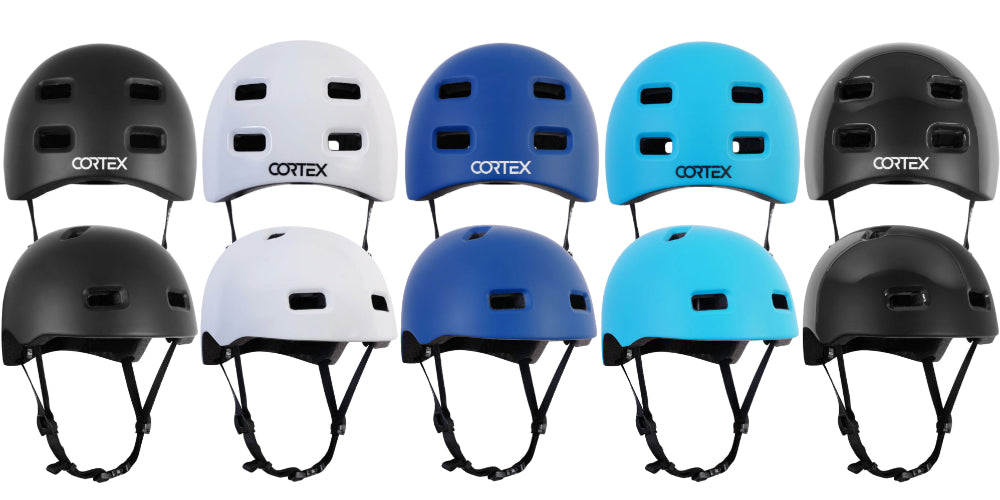
Example: the Cortex Conform, a certified InMould helmet.
Soft shell helmets
A soft shell helmet looks a lot like a certified one from the outside, with the same kind of hard plastic shell. The difference is inside: instead of EPS foam, there’s only a soft foam liner. It cushions the hit and comes back to its shape.
What to know:
- It doesn’t break on impact, so it handles lots of small knocks and being tossed in a bag.
- It protects much less in a big crash than a certified helmet, because the soft liner can’t absorb a hard hit the way EPS does. Still, it’s much better than no helmet at all.
- Quality differences are small. The main one is a fabric-covered liner, which absorbs sweat better and lasts longer.
- They look the same, so check the label. A certified helmet has a certification sticker inside (CPSC, ASTM F1492, etc.). No sticker means it isn’t certified.
Best for: light, low-speed riding, like cruising or learning to push.

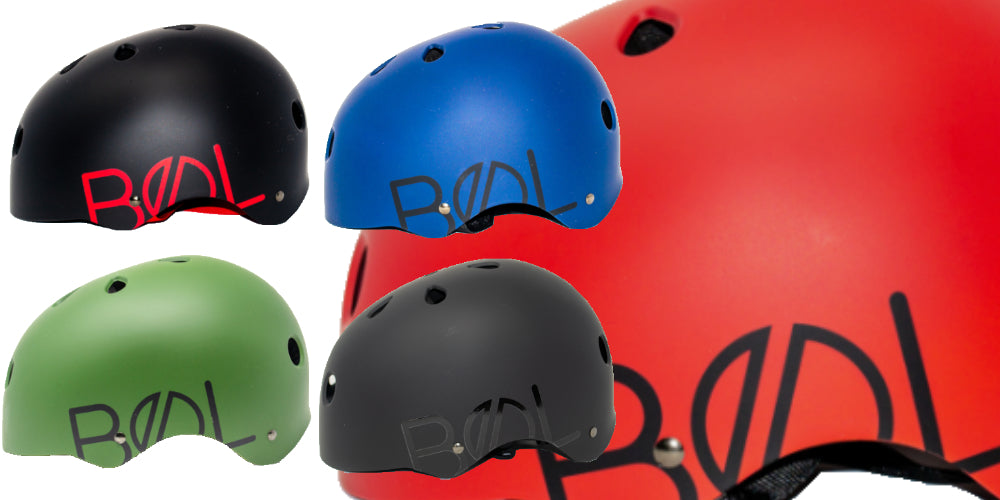
Example: the Bol Rubber Paint, a soft shell helmet.
Which one should I get?
If you’re going to wear a helmet, get a certified one. It costs a bit more, but it’s the only kind tested for real impacts. That’s our recommendation for every rider, and especially for kids.
Are skatepark helmets adjustable?
We get this question a lot, and the answer is yes, they all are. They just don’t all adjust the same way.
- Dial adjustment. A dial at the back tightens a cradle around the head, so you get a snug fit in seconds, every time. You’ll find it on most kids’ helmets, and on what many brands call urban or city helmets, which are basically adult helmets with a dial.
- Pad adjustment. Skate-style helmets keep the classic soft shell look, so there’s no dial. Instead, you fit them with pads of different thicknesses. Some helmets come with extra sets, and for others they’re sold separately, like the S1 Lifer sizing liners. With nothing pressing at the back of the head, a well-fitted pad helmet is usually more comfortable and sits lower. It just takes a bit more time to get the fit right.
A dial doesn’t make a helmet last longer. This is a common misconception. A dial can take up a little slack as a kid grows, but the shell and inside padding still need to be the right size, both to be comfortable and to protect well. When the shell gets too small, it’s time for a new helmet, dial or not.
Dial or pads? Some riders find a dial gets in the way of big tricks like backflips. In our opinion, it’s rarely a real problem: pro BMX and MTB riders wear dial helmets all the time for similar tricks. Pick the one that fits best and that the rider likes wearing.
How to size and fit a helmet
- Measure the head: wrap a soft tape measure around the head, about 2 cm above the eyebrows. Compare it to the brand’s size chart.
- Snug, not tight: the helmet shouldn’t move when you shake your head. On a dial helmet, tighten the dial until it’s snug. On a pad helmet, swap pad thicknesses until the fit is right. The Cortex Conform comes with 4 pad thicknesses, and Yepawith 2 sets.
- Sits low on the forehead: about two fingers above the eyebrows, not tilted back.
- Straps: the side straps form a “V” just under the ears, and you should fit only one finger under the chin strap.
- Between two sizes? Try both in the shop if you can. Otherwise, pick the smaller one if it fits with the thinnest pads.
Don’t forget the pads
Knees and elbows take most of the hits when you’re learning. A set of pads saves a lot of skin and makes riders less afraid to try new tricks.
Shop: Certified helmets · Soft shell helmets · Protective gear sets
Related: Cortex Conform review · Yepa helmets · Freestyle scooter buyer’s guide